Visiting
Madeira in winter, and why February tells you more than August
The short answer
February in Funchal has a mean daily maximum around seven degrees below August, but the rest of the island behaves completely differently. The north coast records nearly twice Funchal’s February rainfall and the mountain station records more than three times it, which is the version of Madeira an August visit never shows.
Funchal mean daily maximum, February
19.9 °C
Mean daily minimum 13.9 °C.
IPMA, 1991–2020 · check it · read August 26, 2026Funchal mean daily maximum, August
26.8 °C
Mean daily minimum 20.7 °C.
IPMA, 1991–2020 · check it · read August 26, 2026Santana mean daily maximum, February
16.4 °C
Derived from the observation and anomaly stated in the IPMA regional bulletin.
IPMA, 1991–2020 normal · check it · read August 26, 202611 more sourced figures on this page
Santana rainfall, February
129.1 mm
Derived from the observation and anomaly stated in the IPMA regional bulletin.
IPMA, 1991–2020 normal · check it · read August 26, 2026Chão do Areeiro mean daily maximum, February
8.7 °C
Derived from the observation and anomaly stated in the IPMA regional bulletin.
IPMA, 1991–2020 normal · check it · read August 26, 2026Chão do Areeiro mean daily minimum, February
2.6 °C
Derived from the observation and anomaly stated in the IPMA regional bulletin.
IPMA, 1991–2020 normal · check it · read August 26, 2026Chão do Areeiro rainfall, February
245.8 mm
Derived from the observation and anomaly stated in the IPMA regional bulletin.
IPMA, 1991–2020 normal · check it · read August 26, 2026North-coast rainfall against Funchal, February
1.78 times
Santana against Funchal, from the two February rainfall normals published on this page.
IPMA, 1991–2020 normal · check it · read August 26, 2026Mountain rainfall against Funchal, February
3.4 times
Chão do Areeiro against Funchal, from the two February rainfall normals published on this page.
IPMA, 1991–2020 normal · check it · read August 26, 2026Funchal days a year above twenty-five degrees
104.1
Days with a maximum over 25 °C, 1991–2020 normal.
IPMA, 1991–2020 · check it · read August 26, 2026Funchal annual rainfall
574.3 mm
The IPMA station normal for 1991–2020 at Funchal, Observatório (522). The regional hydrological study quotes a different long-run average for the same place over an unstated period; the two series are not interchangeable.
IPMA, 1991–2020 · check it · read August 26, 2026Chão do Areeiro station altitude
1,590 m
Approximate, as stated by IPMA in the regional bulletins.
IPMA, 1991–2020 normal · check it · read August 26, 2026Single classified trail, per person over twelve
€4.50
Booked as a dated timeslot on SIMplifica. Not refunded for weather.
IFCN, 2026 · check it · read August 26, 2026Classified routes closed outright
5
Read at the IFCN register on 26 August 2026. Five more were partly open.
IFCN · check it · read August 26, 2026Anybody can enjoy Madeira in August. The seafront is warm, Funchal has recorded 1.3 mm, source: IPMA, 1991–2020, read August 26, 2026 of rain in an average August, and the parts of the island that are difficult are hidden behind good weather.
February is the month that tells you something. Funchal’s mean daily maximum is 19.9 °C, source: IPMA, 1991–2020, read August 26, 2026, which is mild by any northern European standard. On the same days the north coast is taking 1.78 times, source: IPMA, 1991–2020 normal, read August 26, 2026 Funchal’s rain and the mountain station is taking 3.4 times, source: IPMA, 1991–2020 normal, read August 26, 2026.
That gap is the island. Somebody deciding whether they could live here is deciding about the wet, cool, cloud-bound version, and February is when it is on display.
What February actually is on the south coast
Funchal in February has a mean daily maximum of 19.9 °C, source: IPMA, 1991–2020, read August 26, 2026 and 72.4 mm, source: IPMA, 1991–2020, read August 26, 2026 of rain across the month. January is marginally warmer by day at 20.0 °C, source: IPMA, 1991–2020, read August 26, 2026. Neither is cold in any sense a northern European would recognise, and neither is beach weather.
For comparison, August in Funchal is 26.8 °C, source: IPMA, 1991–2020, read August 26, 2026 with 1.3 mm, source: IPMA, 1991–2020, read August 26, 2026 of rain, and the station records 104.1, source: IPMA, 1991–2020, read August 26, 2026 days a year above twenty-five degrees. The annual rainfall total is 574.3 mm, source: IPMA, 1991–2020, read August 26, 2026, which is not much, and most of it arrives outside the summer.
So the winter question is not whether Funchal is pleasant in February. It is.
What February is everywhere else
Santana, on the north coast, has a February mean daily maximum of 16.4 °C, source: IPMA, 1991–2020 normal, read August 26, 2026 and takes 129.1 mm, source: IPMA, 1991–2020 normal, read August 26, 2026 of rain, which is 1.78 times, source: IPMA, 1991–2020 normal, read August 26, 2026 what Funchal takes in the same month.
The Chão do Areeiro station at roughly 1,590 m, source: IPMA, 1991–2020 normal, read August 26, 2026 has a February mean daily maximum of 8.7 °C, source: IPMA, 1991–2020 normal, read August 26, 2026 and a mean daily minimum of 2.6 °C, source: IPMA, 1991–2020 normal, read August 26, 2026. Its rainfall is 245.8 mm, source: IPMA, 1991–2020 normal, read August 26, 2026, which is 3.4 times, source: IPMA, 1991–2020 normal, read August 26, 2026 Funchal’s.
A February morning can therefore be shirtsleeves on the Funchal promenade and near freezing, wet and wind-blasted on a ridge forty minutes away. That is not an unusual day. It is the normal relationship between the two ends of the island, and it is visible in the month-by-month figures for every month of the year those stations publish.
What winter does to the walking
The levadas carry more water and the waterfalls are fuller. PR6.1 Levada do Risco is explicitly better after rain. The laurel forest on PR9 and PR14 is at its wettest and most atmospheric, and Fanal’s fog, which is the entire reason anybody photographs it, is an autumn and winter phenomenon.
Against that: trails close. At the last reading of the IFCN register, 5, source: IFCN, read August 26, 2026 classified routes were closed outright and five more were partly open. Every classified route costs €4.50, source: IFCN, 2026, read August 26, 2026 with a dated timeslot, and the fee is refunded only when IFCN officially closed the trail, never for weather. Booking a week of walking in February means accepting that some of it will be paid for and not walked.
The exposed walks are worse in winter, not better. PR8 on the eastern peninsula has no shelter of any kind, and wind and rain there are genuinely unpleasant. The sea pools at Porto Moniz and Seixal close in swell, and winter is when the swell is biggest. The full permit picture is in the levada guide.
The August blind spot in the data itself
There is a second reason August is a poor month to judge the island on, and it is a documentation one.
IPMA publishes standalone climate normals for only two stations in the archipelago, Funchal and Porto Santo. The north-coast and mountain normals exist only inside a monthly regional bulletin series that began in January 2026, and only seven editions exist. August through December have no published figures for Santana or Chão do Areeiro at all.
So a visitor in August is not only seeing the island at its most flattering. They are seeing the only part of it for which a full published record exists. The wet half of the story is documented for January to July and undocumented after that, and this site says so rather than filling the gap.
What a February visit is actually testing
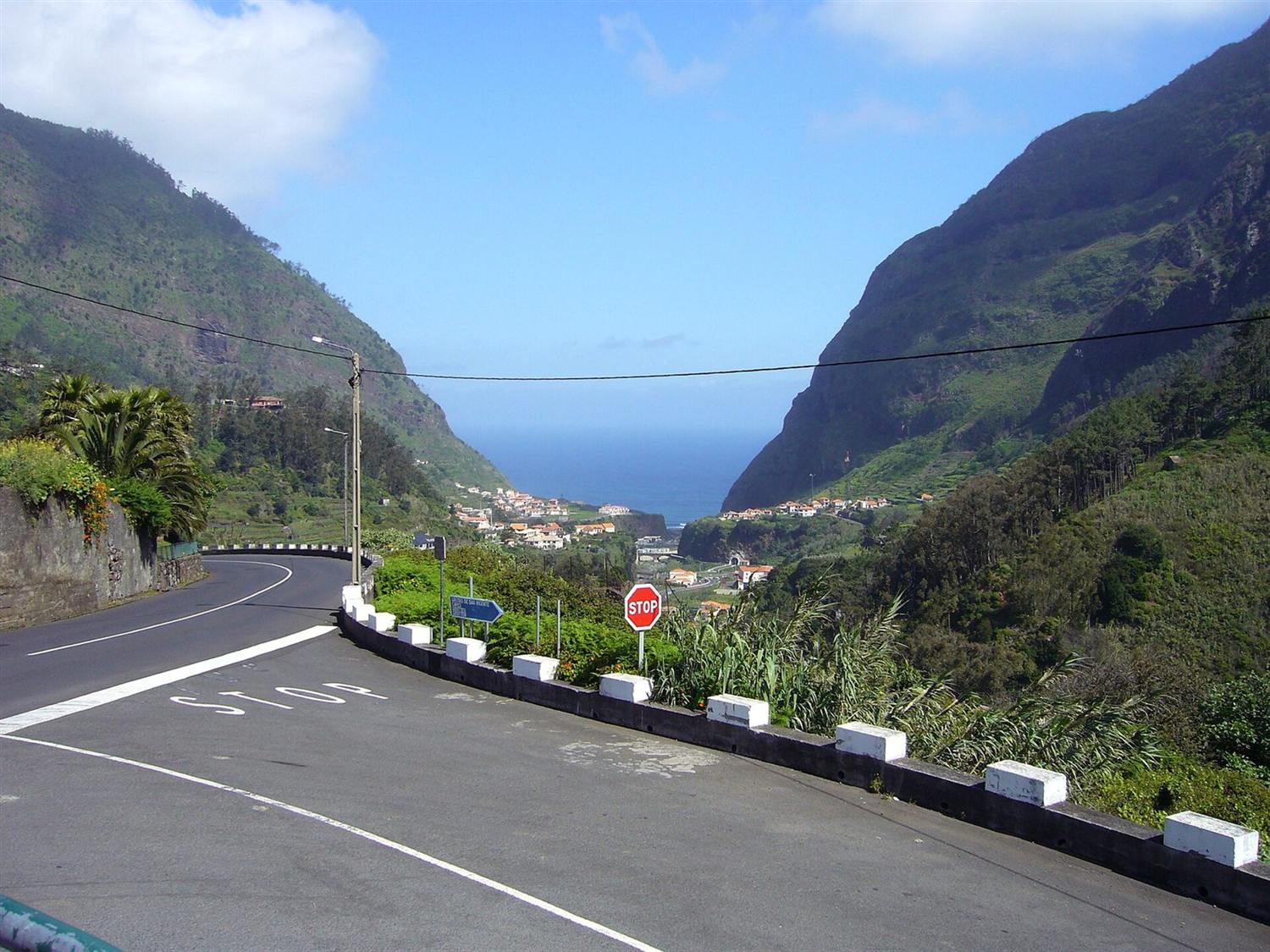
The decision that matters to somebody thinking about moving is which side of the mountain they can live on. The north is greener because it is wetter, by a margin the photographs never carry and the figures do.
A February trip puts that in front of you: the drive over in cloud, the days the ridge is shut, how a north-coast village feels when the light goes at five, and whether the mild, bright south coast is worth the price it carries. An August trip answers none of those questions, because in August the island does not ask them.
The route that covers both coasts in one trip, with a wet-weather alternative on every day, is the ten-day guide, and the individual walks and viewpoints are under things to do, each with its season and its caveat attached. How the buses and the roads behave once the weather turns is in the transport guide.
Questions people actually ask
Is Madeira warm in winter?
Funchal is mild: a February mean daily maximum of 19.9 °C, source: IPMA, 1991–2020, read August 26, 2026 and 20.0 °C, source: IPMA, 1991–2020, read August 26, 2026 in January. The mountains are not. The Chão do Areeiro station has a February mean daily maximum of 8.7 °C, source: IPMA, 1991–2020 normal, read August 26, 2026 and a mean daily minimum of 2.6 °C, source: IPMA, 1991–2020 normal, read August 26, 2026.
Does it rain a lot in Madeira in February?
In Funchal, 72.4 mm, source: IPMA, 1991–2020, read August 26, 2026 across the month. On the north coast, 129.1 mm, source: IPMA, 1991–2020 normal, read August 26, 2026, which is 1.78 times, source: IPMA, 1991–2020 normal, read August 26, 2026 as much. At the mountain station, 245.8 mm, source: IPMA, 1991–2020 normal, read August 26, 2026.
Can you walk the levadas in winter?
Many of them, and several are better for it because the water is higher. Closures are more likely though: at the last reading of the IFCN register 5, source: IFCN, read August 26, 2026 routes were shut outright and five more partly open, and the €4.50, source: IFCN, 2026, read August 26, 2026 fee is not refunded for weather.
Is February a better month to visit than August?
For seeing what the island is actually like, the February figures show far more of it. For a beach holiday, August in Funchal is 26.8 °C, source: IPMA, 1991–2020, read August 26, 2026 with 1.3 mm, source: IPMA, 1991–2020, read August 26, 2026 of rain, and it is the easier trip by a wide margin.
Why are there no north-coast weather figures for winter months?
Because IPMA does not publish them for August through December. Those stations have no standalone normals sheet, and the regional bulletin series that states their normals only began in January 2026.
Where this came from
- IPMA: Normais climatológicas 1991–2020 — Funchal, Observatório (estação 522). ipma.pt/bin/file.data/climate-normal/cn_91-20_FUN Read August 26, 2026.
- IPMA: Boletim Climatológico da Região Autónoma da Madeira — January 2026. ipma.pt/resources.www/docs/im.publicacoes/edicoes Read August 26, 2026.
- IPMA: Boletim Climatológico da Região Autónoma da Madeira — February 2026. ipma.pt/resources.www/docs/im.publicacoes/edicoes Read August 26, 2026.
- IFCN: Percursos Pedestres Recomendados — registo e estado dos percursos. ifcn.madeira.gov.pt/pt/atividades-de-natureza/percursos-pedes Read August 26, 2026.
- IFCN: Percursos Pedestres Classificados — taxas e reservas (FAQ). ifcn.madeira.gov.pt/pt/atividades-de-natureza/percursos-pedes Read August 26, 2026.